
CE Training Events
Upcoming Events

Innovations in Case Conceptualization
March 26th, 2026, 11am-12pm, 1 CE credit – Presented by Carryl P. Navalta, Ph.D.
Struggling to move beyond surface-level client presentations? In this practical 1-hour webinar, discover a streamlined framework that turns clinical complexity into clarity. You’ll master a two-part approach that captures the complete clinical picture—from root causes to strengths-based resources—and grounds the strategy in validated psychological theory. Learn how to integrate contextual and systemic factors alongside individual cognitive, behavioral, emotional, and developmental processes, then see how AI tools can accelerate your formulation without replacing clinical judgment. Walk away with a replicable method that delivers the personalized, evidence-aligned understanding your clients deserve—and positions your practice at the forefront of modern behavioral health care.
Past Events
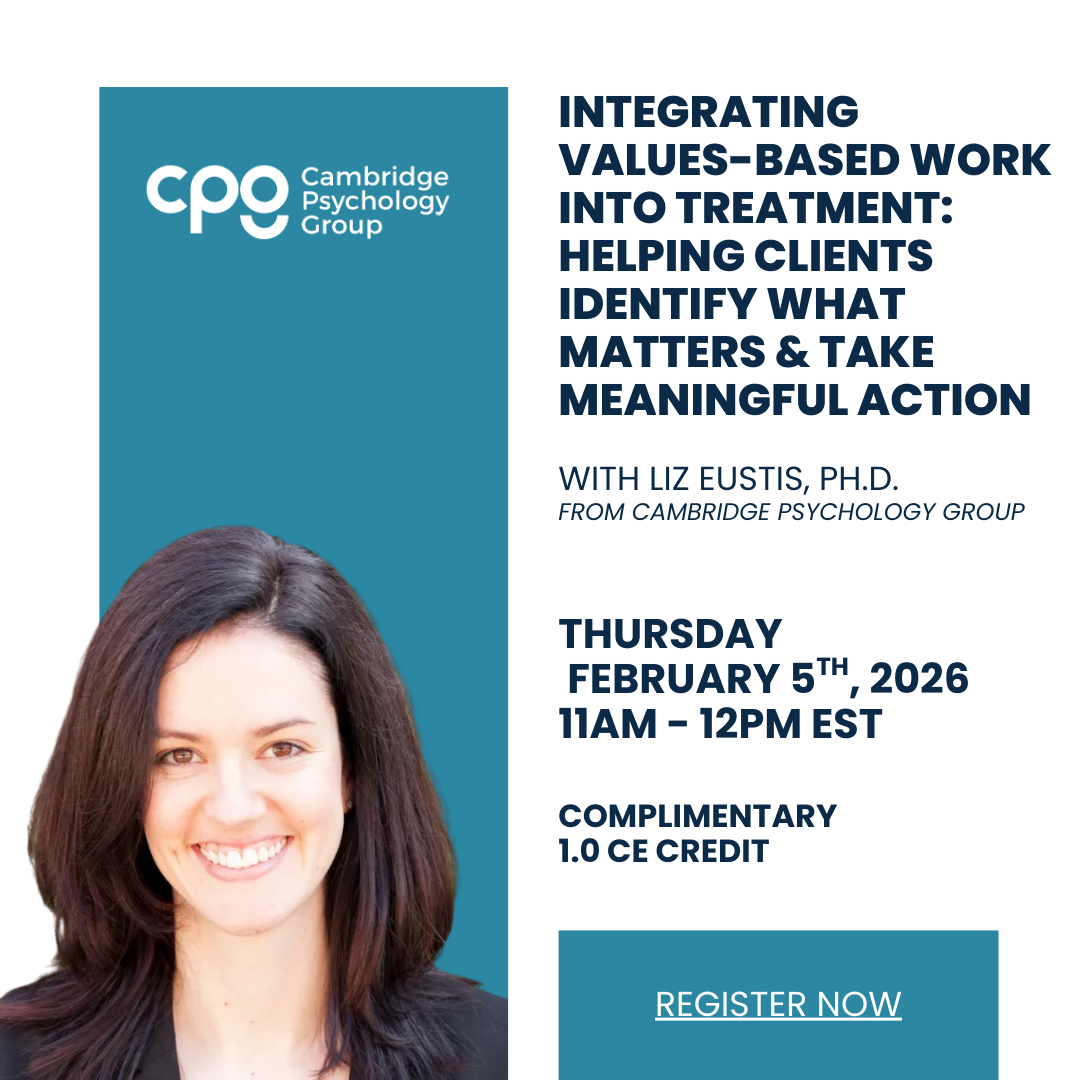
Integrating Values-Based Work into Treatment: Helping Clients Identify What Matters & Take Meaningful Action
February 5, 2026, 11am-12pm, 1 CE credit – Presented by Liz Eustis, Ph.D.
This 1-hour webinar provides an overview of integrating values-based work into clinical treatment. Participants will learn how to help clients clarify their values, identify values-based actions, and address common challenges such as distinguishing values from goals and navigating internal, external, and systemic barriers. The presentation will emphasize culturally responsive practice and illustrate key concepts through case examples.

Conceptualizing and Treating Core Emotion Dysregulation
December 4th, 2025, 11am-12pm, 1 CE credit – Presented by Kelly Klein, Ph.D.
This 1-hour webinar will provide an overview of using a bio-psycho-social-cultural framework to understand and treat clients with core emotion dysregulation, within and outside the context of personality disorders such as borderline personality disorder. Topics include how client–environment interactions shape ineffective behaviors, managing personality disorder features that interfere with treatment, and providing affirming, motivating feedback about dysregulation. The presentation will also cover applying DBT-informed principles to teach emotion regulation, use the therapy relationship as a change agent, and integrate exposure-based techniques to address impulsivity, self-invalidation, and trauma-related factors.

Assessing and Treating Perinatal Mood and Anxiety Disorders
October 30th, 2025, 11am-12pm, 1 CE credit – Presented by Jasmine Mote, Ph.D.
This webinar offers an overview of perinatal mood and anxiety disorders, covering prevalence, assessment tools such as the Edinburgh Postnatal Depression Scale, and key factors in case conceptualization. Participants will learn evidence-based interventions, explore resources for further training, and see these strategies illustrated through case examples.
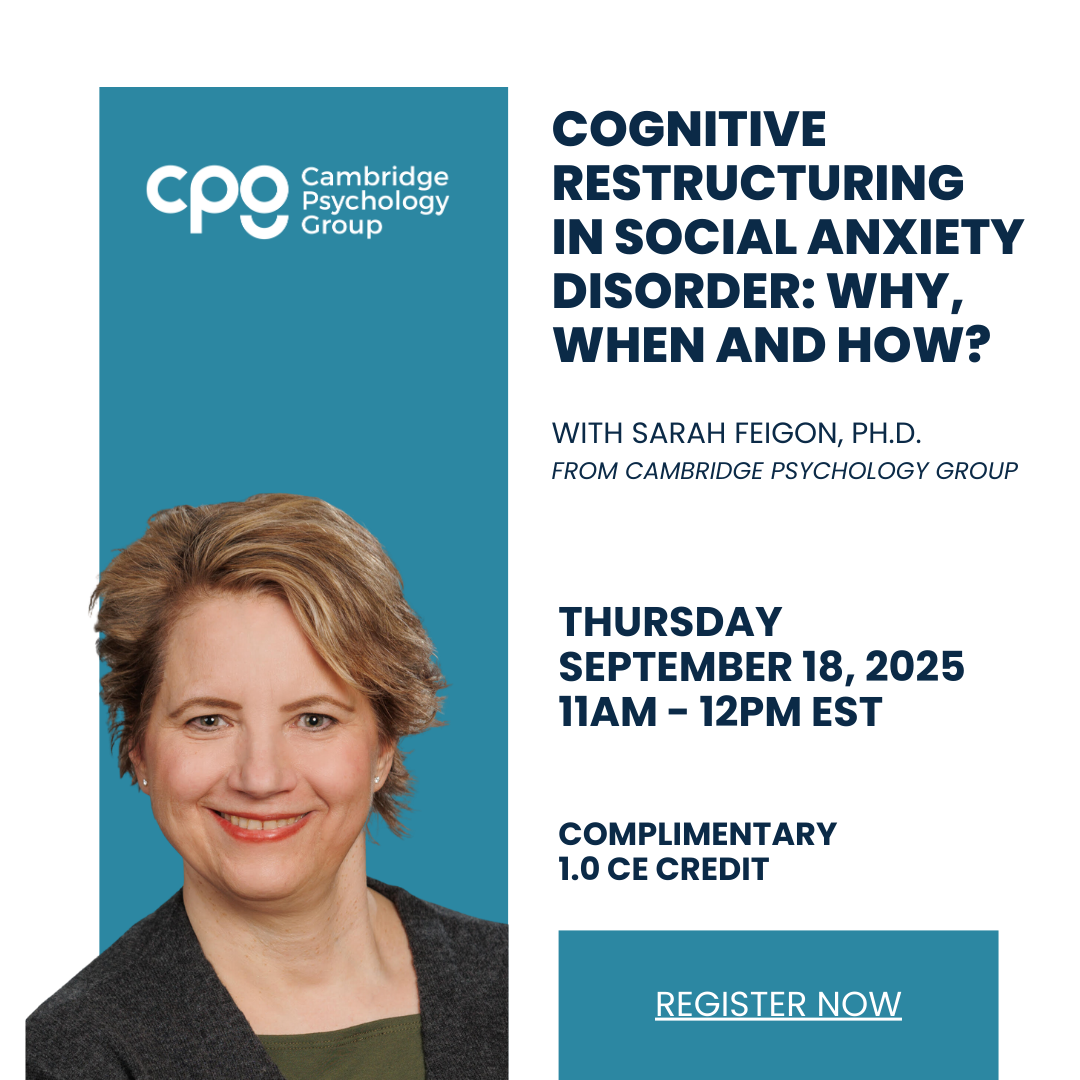
Cognitive Restructuring in Social Anxiety Disorder: Why, When and How?
September 18th, 2025, 11am-12pm, 1 CE credit – Presented by Sarah Feigon, Ph.D.
This complimentary, one hour webinar will cover cognitive process and content in social anxiety disorder, explore whether cognitive restructuring confers additional benefit when added to exposure alone, and discuss considerations when deciding whether to use cognitive restructuring in conjunction with exposure. Finally, we will describe and illustrate clinical implementation of cognitive restructuring strategies for social anxiety disorder, including culturally sensitive applications of these strategies.
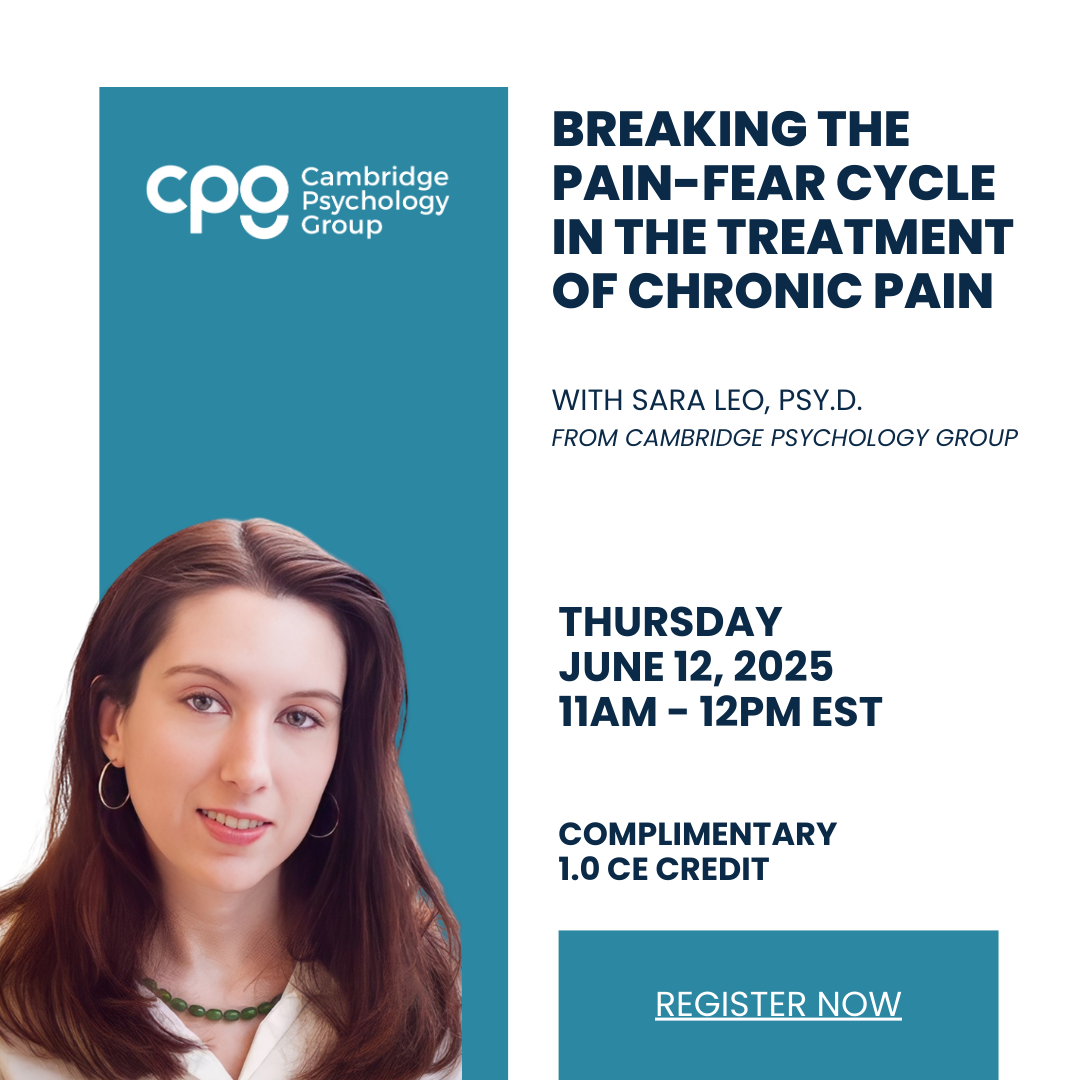
Breaking the Pain-Fear Cycle in the Treatment of Chronic Pain
June 12th, 2025, 11am-12pm, 1 CE credit – Presented by Sara Acker Leo, Psy.D.
In this one-hour, clinically-oriented webinar, participants will learn about the role that the pain-fear cycle has in triggering, worsening, and perpetuating chronic pain. This presentation will teach mental health clinicians to evaluate the roles of associated cues and faulty threat assessments related to a client’s pain. Clinicians will learn practical interventions to help clients convey messages of safety to their brains, engage in gentle exposures and experiential learning, and change the way their brains respond to perceived threats around pain. The integration of pain reprocessing therapy (PRT) with other pain management strategies including CBT and mindfulness-based techniques will be discussed.

A Guide to Conducting Exposures with Confidence
February 20th, 2025, 11am-12pm, 1 CE credit – Presented by Beth Shikatani, Ph.D.
This presentation will provide a beginner to beginner/intermediate overview and step-by-step guide to conducting exposures for anxiety disorders and obsessive-compulsive disorder, through a cognitive behavioral and acceptance and commitment therapy lens. Topics covered will include: the rationale for conducting exposures, creating a values-aligned exposure hierarchy and list of safety behaviors or compulsions, the 3 different types of exposures (i.e., situational, interoceptive, imaginal), and tips for navigating common challenges such as low motivation.
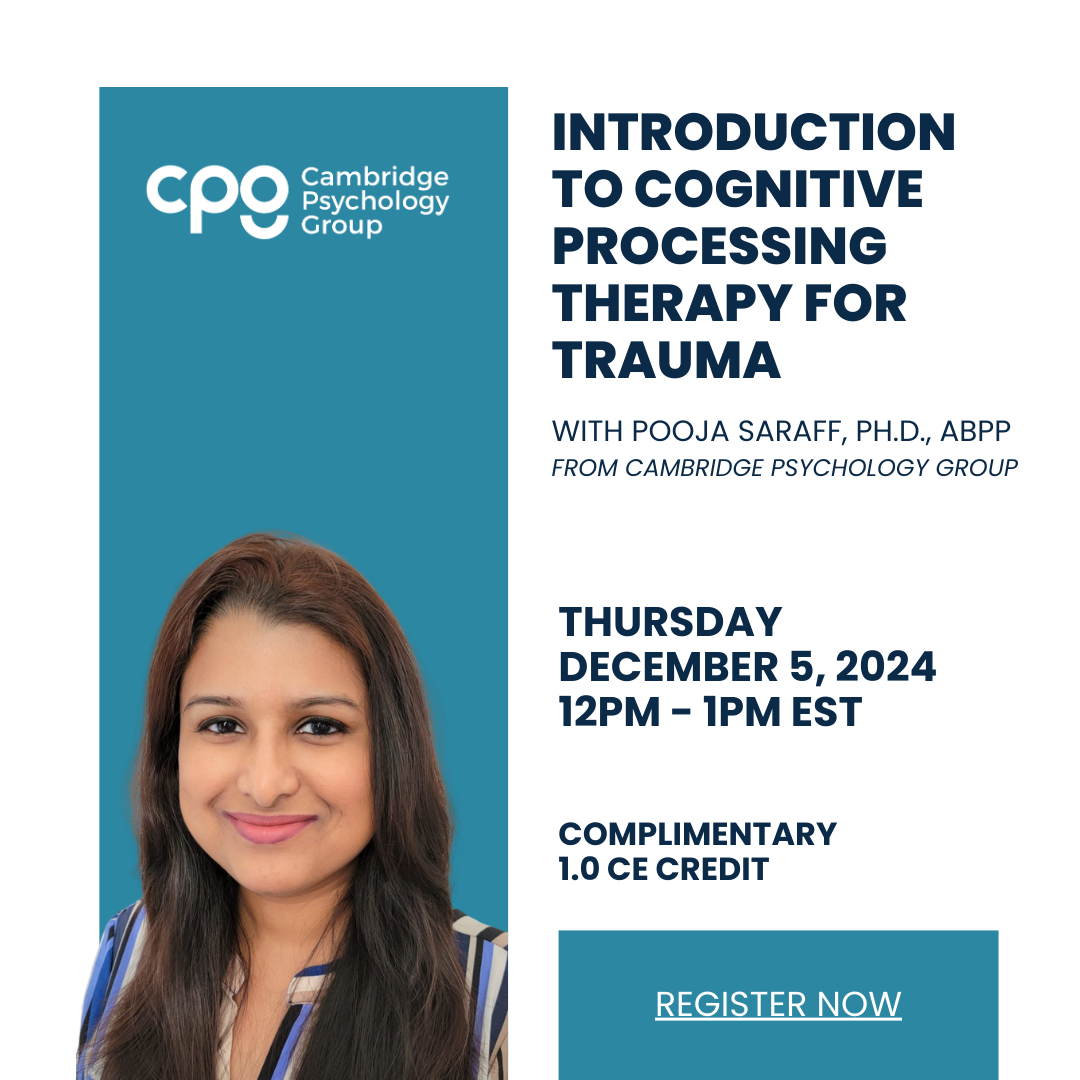
Introduction to Cognitive Processing Therapy for Trauma
December 5th, 2024, 12pm-1pm, 1 CE credit – Presented by Pooja Saraff, Ph.D., ABPP
This webinar will provide clinicians an overview of how to deliver cognitive processing therapy (CPT) on a session-by-session basis, along with information about the theory behind the treatment, situations in which it is most helpful, and therapist barriers to providing the treatment effectively. It is aimed at helping clinicians who are unfamiliar with CPT to either feel comfortable providing CPT or to recommend it to clients with PTSD.
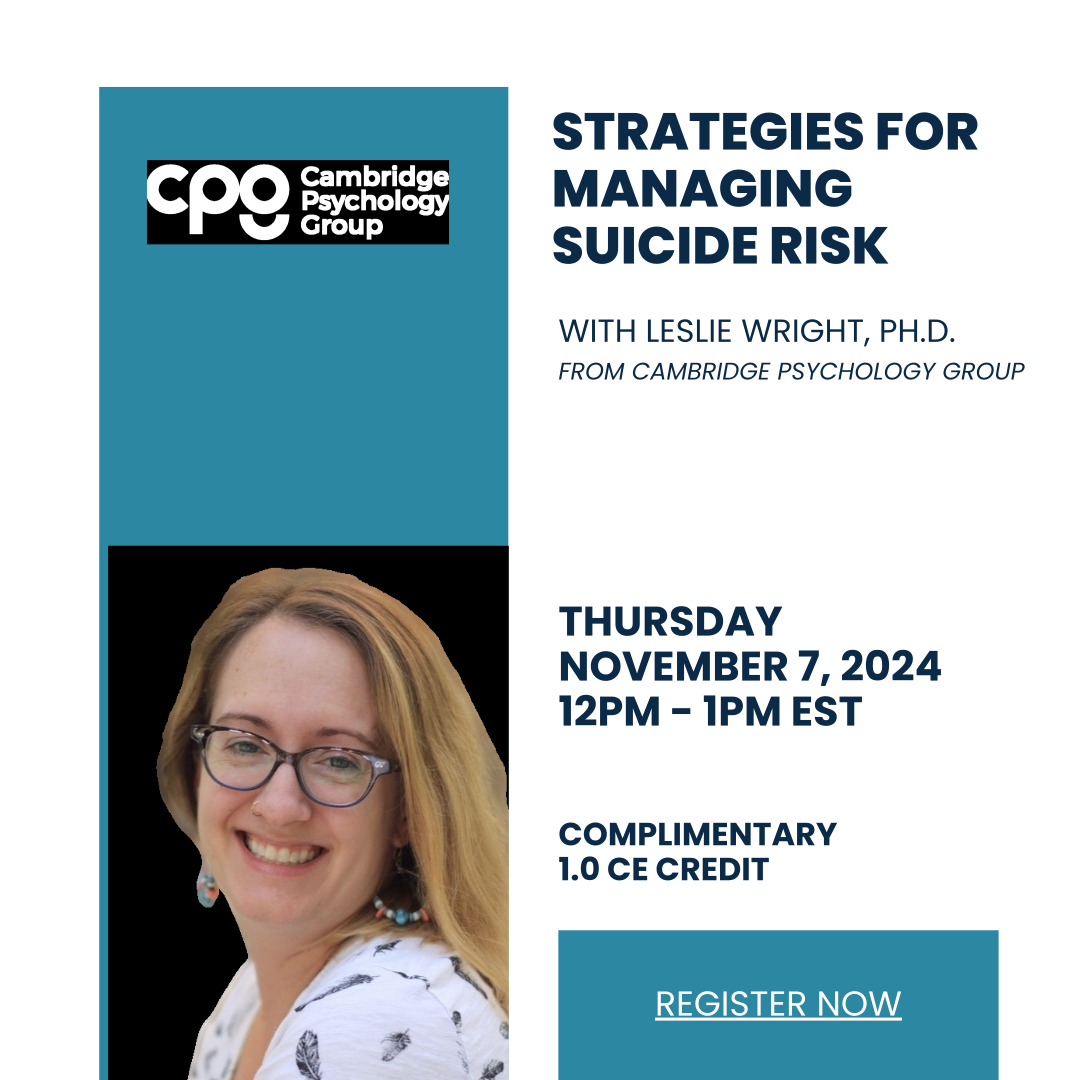
Strategies for Managing Suicide Risk
November 7th, 2024, 12pm-1pm, 1 CE credit – Presented by Leslie Wright, Ph.D.
This webinar will review strategies for managing suicide risk, including strategies to maintain clients safely on an outpatient basis and considerations for taking further action if necessary. We will discuss a variety of considerations that can inform decision-making as well as the steps involved in initiating a crisis response.

Tips & Tricks for Treating OCD
June 27 th, 2024, 12pm-1pm, 1 CE credit – Presented by Beth Shikatani, PhD
This presentation will provide practical and skills-based learning for mental health professionals on the topic of obsessive-compulsive disorder (OCD). Concrete tools will be taught to help practitioners integrate cognitive work and Acceptance and Commitment Therapy (ACT) strategies into traditional Exposure and Response Prevention, and there will be diagrams, analogies, videos, and meditations included. The focus of the presentation will be on psychoeducation on OCD, cognitive therapy, ACT strategies, and methods to reduce mental compulsions. A case example will be discussed to illustrate how these strategies may be integrated.

Cognitive Behavioral Therapy for Insomnia & Integration with Existing Care
May 30th, 2024, 12pm-1pm, 1 CE credit – Presented by Michael Goldstein, Ph.D.
This complimentary webinar equips clinicians with unique strategies for addressing insomnia using CBT-I. Catering to both expert and non-expert audiences, we will cover tools for assessing sleep habits, fundamentals of sleep regulation, and guidance on CBT-I delivery, with practical examples of integrating other therapies such as ACT and HRV biofeedback.

Evidence-Based Strategies for Addressing Social Isolation and Loneliness in People with Psychosis Spectrum Disorder
April 25th, 2024, 12pm-1pm, 1 CE credit – Presented by Jasmine Mote, Ph.D.
This complimentary webinar will present an overview of the evidence on understanding and addressing loneliness in people living with psychosis. It will discuss why this is an important treatment need, present assessments of loneliness and its consequences, review promising treatments, and provide real-world clinical case examples with this population.

Trauma-Informed Care for Children & Adolescents with Behavioral Health Problems
March 28th, 2024, 12pm-1pm, 1 CE credit – Presented by Carryl Navalta, Ph.D.
This presentation will first review exposure to trauma and adversity during early development as a prominent risk factor for behavioral health problems in children and adolescents. A trauma-informed lens will then be introduced to guide clinicians in their assessment and case conceptualization practices. The workshop will conclude by covering science-based treatments for youth who are experiencing trauma-related symptoms and problems.

A Practical Guide to CBT for Perfectionism
March 23, 2023, 12pm-1pm – Presented by Beth Shikatani, Ph.D.
The presentation will provide practical and skills-based learning for mental health professionals. Topics include: defining perfectionism and its domains, discussing perfectionism’s association with other difficulties, presenting the cognitive behavioral model of perfectionism, and conceptualizing perfectionism as a maintenance factor of various psychological difficulties. Assessment strategies and CBT treatment skills of cognitive restructuring and changing perfectionistic behaviors will be taught in detail, followed by a Q&A.